A trader sees NQ down 35 points and thinks, "That is only 35 points." It is not. One NQ point is $20 per contract. Thirty-five points is $700 per contract before fees, slippage, or bad decision-making. The chart showed points. The account felt dollars.
That gap is why tick value matters. If you do not know what one tick is worth, you do not know what the trade costs when it is wrong.
The Core Formula
Use this before every futures trade:
Trade Risk Formula
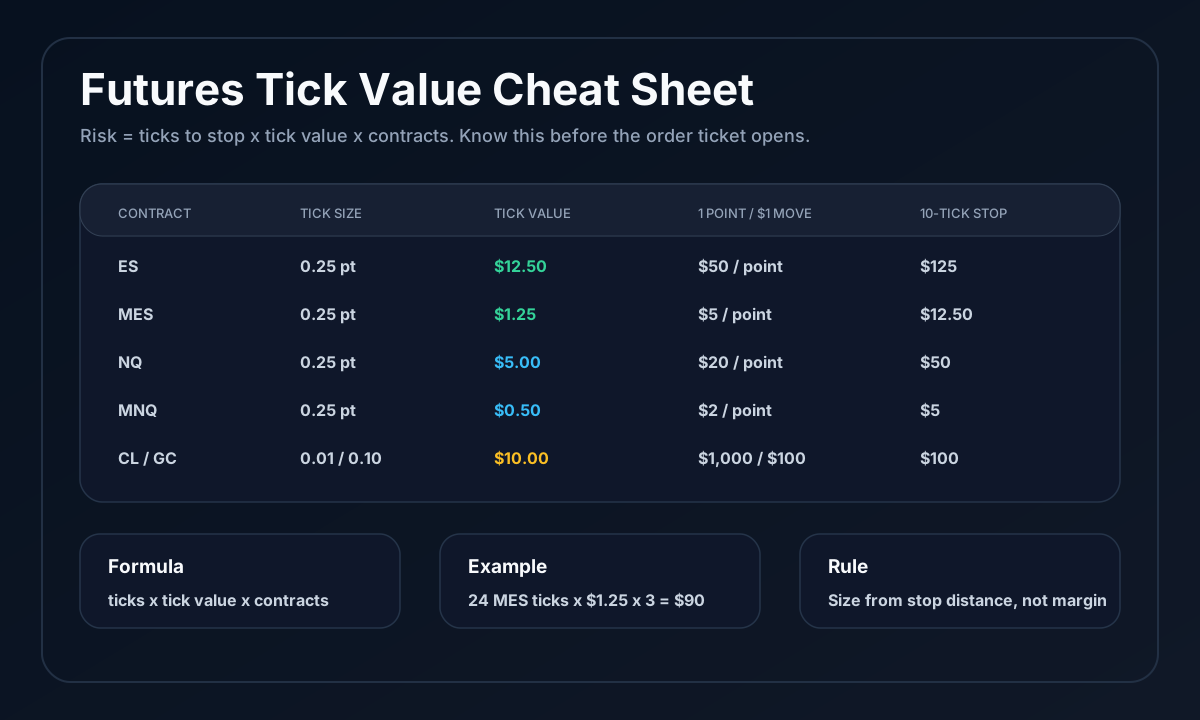
Risk = stop distance in ticks x tick value x contracts
If your MES stop is 24 ticks and you trade 3 contracts, the risk is:
24 ticks x $1.25 x 3 contracts = $90 before commissions and slippage.
This is the same logic inside the futures position size calculator. The calculator is faster. The formula is non-negotiable.
Futures Tick Value Cheat Sheet
| Contract | Market | Tick Size | Tick Value | Point / $1 Move |
|---|---|---|---|---|
| ES | E-mini S&P 500 | 0.25 point | $12.50 | $50 / point |
| MES | Micro E-mini S&P 500 | 0.25 point | $1.25 | $5 / point |
| NQ | E-mini Nasdaq-100 | 0.25 point | $5.00 | $20 / point |
| MNQ | Micro E-mini Nasdaq-100 | 0.25 point | $0.50 | $2 / point |
| YM | E-mini Dow | 1 point | $5.00 | $5 / point |
| MYM | Micro E-mini Dow | 1 point | $0.50 | $0.50 / point |
| RTY | E-mini Russell 2000 | 0.10 point | $5.00 | $50 / point |
| M2K | Micro E-mini Russell 2000 | 0.10 point | $0.50 | $5 / point |
| CL | WTI Crude Oil | 0.01 | $10.00 | $1,000 / $1 move |
| GC | Gold | 0.10 | $10.00 | $100 / $1 move |
| SI | Silver | 0.005 | $25.00 | $5,000 / $1 move |
| ZB | 30-Year Treasury Bond | 1/32 | $31.25 | $1,000 / full point |
Treat this table as a working reference, not a substitute for your broker or exchange contract specs. Exchanges can list contract variants, and brokers can show symbols differently. Verify the exact product before trading real money.
Tick Size vs Tick Value
Tick size is the smallest price increment. Tick value is the dollar value of that increment.
ES and MES both move in 0.25-point ticks. That does not mean they carry the same risk. ES pays or loses $12.50 per tick. MES pays or loses $1.25 per tick. Same chart shape, different dollar engine.
That is why micro futures position sizing matters. Micros are not toys. They are smaller versions of leveraged futures contracts.
Point Value Is Where Traders Get Hurt
Most platforms show price in points, handles, cents, or fractions. Your P&L moves in dollars.
- One ES point is $50 per contract.
- One NQ point is $20 per contract.
- One CL dollar move is $1,000 per contract.
- One GC dollar move is $100 per contract.
- One SI dollar move is $5,000 per contract.
This is why futures margin and risk are not the same thing. Margin might let you open the trade. Tick value decides how fast the trade can damage you.
Stop Distance Example: MES vs ES
Say the setup needs a 6-point stop in S&P futures. Six points is 24 ticks because each tick is 0.25 point.
| Contract | Stop | Tick Value | Risk / Contract |
|---|---|---|---|
| MES | 24 ticks | $1.25 | $30 |
| ES | 24 ticks | $12.50 | $300 |
Same chart. Same stop in points. Ten times the dollar risk.
If that sounds obvious, good. Still calculate it. Most avoidable losses happen when the trader knows the concept but skips the arithmetic.
Beginner Mistakes With Tick Values
- Counting points but sizing contracts: "Only five points" means something different in MES, ES, NQ, and CL.
- Using margin as risk: the broker's required margin is not your stop loss.
- Forgetting the contract count: five micros can become half an E-mini faster than you think.
- Ignoring slippage: fast markets can add ticks to your loss before the stop fill completes.
- Trading unfamiliar products: ZB, SI, CL, and metals have different quote conventions than equity micros.
If you are choosing between equity micros, read Micro NQ vs Micro ES. MNQ's tick value is smaller, but NQ-style movement can make the real trade risk larger.
The 10-Second Pre-Trade Check
Before the order ticket opens, answer these:
- What contract am I trading?
- What is one tick worth?
- How many ticks to my stop?
- How many contracts am I using?
- What is the dollar risk before fees and slippage?
- Does that fit my daily loss limit?
If you cannot answer all six, you are not ready to place the trade.
How This Fits the Full Process
Tick value is not a strategy. It is the risk translation layer between the chart and your account.
Use the futures pre-market checklist to define the session plan, reward-to-risk examples to judge whether the trade is worth taking, and the position size calculator to convert the setup into a contract count.
After the trade, tag the actual contract, tick risk, and slippage in the futures trading journal. A journal that says "lost on NQ" is vague. A journal that says "NQ, 22-tick stop, 2 contracts, planned $220 risk, filled -$245 after slippage" can teach you something.
Source and risk notes
- CME's tick movement education explains that all futures contracts have a minimum price fluctuation called a tick and gives the ES example: 0.25 x $50 = $12.50 per tick: Tick Movements: Understanding How They Work.
- CME's Micro E-mini S&P 500 page states that MES is $5 times the S&P 500 Index with a 0.25-point minimum tick: Micro E-mini S&P 500 futures.
- CME's Micro E-mini Nasdaq-100 page states that MNQ is $2 times the Nasdaq-100 Index with a 0.25-point minimum tick: Micro E-mini Nasdaq-100 futures.
- CME's Gold contract specs identify GC as a 100 troy ounce contract quoted in U.S. dollars and cents per troy ounce: Gold futures contract specs.
- Charles Schwab's index futures tick value guide explains that traders use ticks to track position performance, define risk, and execute with more precision: Stock Index Futures Tick Values Explained.
- NFA investor best-practice materials warn that futures trading is risky and should use only risk capital a trader can afford to lose: NFA Investor Best Practices.
- Contract specifications, margin, symbols, and broker displays can change or vary by product. Confirm current exchange and broker specs before trading.
Final rule: every futures trade starts as a math problem. If you know the tick value, stop distance, and contract count, the trade can be managed. If you skip that work, you are not trading a setup. You are guessing how much pain the chart can create.
Turn tick value into exact trade risk
Tick value only becomes useful when it is converted into stop distance, contract count, and a dollar risk that fits the plan.