Skip to content
v3 redesign is live — welcome to the trading cockpit.
Market updates, stock news, and futures insights — 3x/week, freeSubscribe free
Skip to content
build.logtraders.online=2,166trades.60s=74swings.ranked=308edge.latency_ms=42ms
Back to Blog
Trading Education

The Complete STS Learning Path: What to Read First

S
Sage

Head of Trading Education

14 min read
Updated June 17, 2026
The Complete STS Learning Path: What to Read First

What is "The Complete STS Learning Path: What to Read First" about?

A practical reading path for learning Nexural's STS trading framework: futures basics, risk, levels, regime, order flow, playbooks, journaling, and review.

Most traders do not need more random trading content. They need an order. If you read order flow before you understand risk, it turns into decoration. If you study playbooks before you understand levels, every chart starts looking like permission. If you journal after you have already built bad habits, the journal becomes a confession booth.

The STS learning path fixes the order.

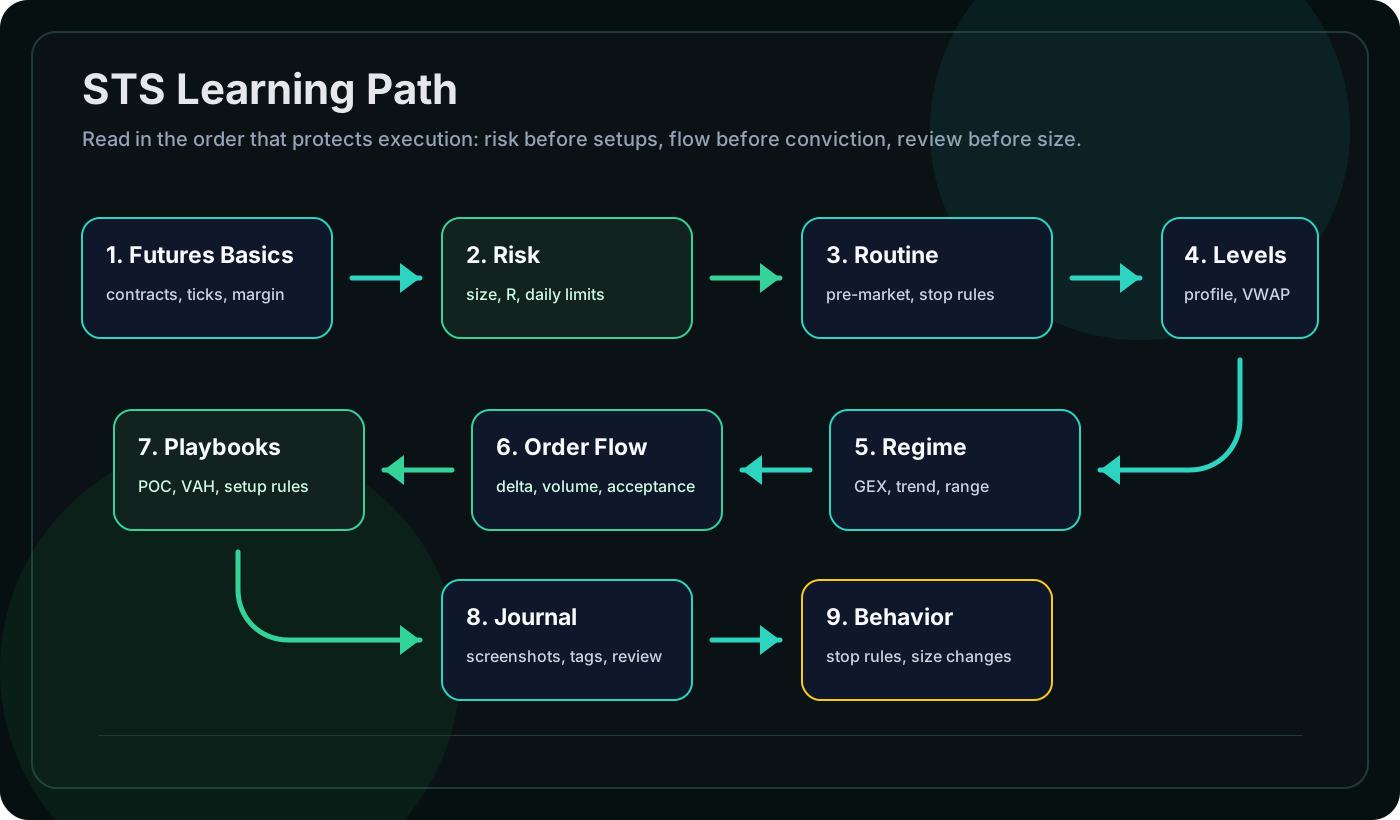
Start with the mechanics. Then risk. Then levels. Then regime. Then flow. Then playbooks. Then review. The sequence matters because each layer keeps the next one from becoming a toy.

STS learning path roadmap showing futures basics, risk, levels, regime, order flow, playbooks, journal, and review

How to Use This Path

Do not binge all of this in one night and call it progress.

Use the path like a curriculum:

  1. Read one layer.
  2. Write the rule it gives you.
  3. Apply the rule in sim, replay, or very small size.
  4. Journal what happened.
  5. Move to the next layer only when the current layer changes behavior.

The goal is not to sound smarter about trading. The goal is to make fewer improvised decisions while the market is moving.

Layer 1: Futures Basics

Start here if you do not fully understand contracts, tick values, leverage, margin, and why a small move can create a large dollar result.

Read:

Do not skip this because you are eager to trade. If you do not know the tick value, you do not know the trade.

Layer 2: Risk and Position Sizing

Risk is the first real trading skill. Strategy comes later.

Read:

Use the tools while reading:

The output of this layer is a written risk plan: max daily loss, max trade risk, max trades, size rules, and stop-after rules.

Layer 3: Pre-Market and Routine

Before you study setups, learn how to prepare the day.

Read:

The output of this layer is a daily workflow. You should know what you check before the open, what makes a level active, what you are allowed to trade, and what stops the session.

Layer 4: Levels and Auction Context

Now learn where trades can happen.

Read:

The output of this layer is a cleaner chart: active levels, reference levels, stale levels, and invalidation points.

Layer 5: Regime

The same setup can behave differently in different regimes.

Read:

The output is a regime label before the trade: balanced, trending, positive GEX, negative GEX, transition, or unknown. If you do not know the regime, reduce confidence.

Layer 6: Order Flow

Flow tells you whether the market is showing up at the level.

Read:

The output is a confirmation habit: no clean setup gets full permission without participation, acceptance/rejection, and usable R:R.

Layer 7: Playbooks

Only now should you spend serious time on playbooks.

Read:

The output is not a list of setups you like. It is a personal playbook with location, context, confirmation, invalidation, risk, and review rules.

Layer 8: Backtesting and Review

Before scaling anything, review samples.

Read:

Use the Nexural journal. The path is incomplete until you can classify normal losses, execution errors, missed trades, stale-level trades, and no-flow failures.

Layer 9: Behavior Repair

When execution breaks, stop adding strategy. Fix behavior.

Read:

The output is a stop-trading rule. Not a speech. A rule.

The 30-Day Reading Plan

Week Focus Output
Week 1futures basics, tick value, margin, riskwritten risk plan
Week 2routine, levels, profile, stale levelsdaily pre-market map
Week 3regime, flow, confirmationtrade permission checklist
Week 4playbooks, journal, review, behavior repairpersonal STS playbook

If you are newer, stretch this to 60 or 90 days. Faster reading does not create faster skill if the rules never reach execution.

What to Do After This Path

After the path, build your own one-page STS plan:

  • markets and contracts you trade,
  • max daily loss and max trade risk,
  • one or two primary playbooks,
  • regime filters,
  • flow confirmation rules,
  • journal tags,
  • scale-up and size-down rules,
  • stop-trading rules.

Then run the plan through live journaling and review. The content path gives you the language. The journal tells you whether the language became behavior.

Source and risk notes

  • CME's Introduction to Futures course is designed to explain futures contracts, how they trade on exchanges, and how customers use them: CME Introduction to Futures.
  • CME's broader education library offers courses and tools for learning futures, options, markets, and trading concepts: CME Education.
  • CFTC's futures basics material warns that commodity futures and options speculation is volatile, complex, and risky: CFTC Futures Market Basics.
  • NFA investor resources emphasize education, due diligence, and understanding risks before participating in futures or retail forex markets: NFA Investor Resources.
  • NinjaTrader's beginner futures guidance highlights position sizing, stop-loss orders, leverage, and micro contracts as ways newer traders can manage exposure: Futures Trading Dos and Don'ts.
  • This article is educational. A learning path can improve process, but it cannot remove futures leverage, liquidity, slippage, platform, event, or execution risk.

Final rule: read in the order that protects you. Risk before setups. Levels before entries. Flow before conviction. Journal before ego. Review before size.

Next Step

Start the STS path with risk, not setups

The complete path works because each layer earns the next one: mechanics, risk, routine, levels, regime, flow, playbooks, journal, and behavior repair.

#STS learning path#trading education#futures trading#order flow#risk management
Share this articleTwitterLinkedIn

Frequently asked questions

What should I read first in the STS learning path?

Start with futures basics and risk, then move into volume profile, GEX regimes, order flow, playbooks, journaling, and review. Do not begin with advanced setups before understanding contract risk.

Is the STS learning path for beginners?

Yes, but beginners should follow the sequence. The path starts with risk, contract mechanics, and routine before moving into order flow and strategy playbooks.

How long does it take to work through the STS learning path?

A serious reader can work through the core path in two to four weeks, but the goal is not speed. The goal is building a repeatable process you can journal and review.

Should I trade while reading the STS path?

If you are new, use simulation or very small size while learning. The early path should focus on contract mechanics, risk, journaling, and process rather than trying to monetize every setup.

What comes after the STS learning path?

After the path, build a personal playbook, backtest or review samples, track trades in the journal, and refine risk limits before increasing size.

S
Sage

Head of Trading Education

Head of Trading Education at Nexural. A futures and swing trader who built the Nexural cockpit to survive his own trading — institutional-grade research, an event-sourced journal, and tools whose math is public. Writes the way he trades: receipts over marketing.

Run the system, not the screenshots

The Nexural Swing Desk ranks setups against the same composite-z gauntlet — no signals, no auto-execute.