
Skip to content
v3 redesign is live — welcome to the trading cockpit.
Market updates, stock news, and futures insights — 3x/week, freeSubscribe free
Skip to content
build.logtraders.online=2,166trades.60s=74swings.ranked=308edge.latency_ms=42ms
Back to Blog
Trading Education

The Futures Trader's Pre-Market Checklist

S
Sage

Head of Trading Education

9 min read
Updated June 17, 2026
The Futures Trader's Pre-Market Checklist

What is "The Futures Trader's Pre-Market Checklist" about?

A practical futures pre-market checklist for deleting bad trades before the open: event risk, overnight range, auction map, regime, playbooks, risk limits, and the first journal note.

Two traders watch the same ES open. One sees a candle ripping through the first five minutes and chases. The other already knows CPI is tomorrow, overnight inventory is long, price is opening above prior value, and the first valid playbook is a pullback into VWAP or no trade. Same market. Different morning.

Pre-market prep is not there to make you sound informed. It is there to delete bad trades before the open starts charging tuition. If the prep does not produce a map, a playbook, and a risk limit, you are not prepared. You are awake.
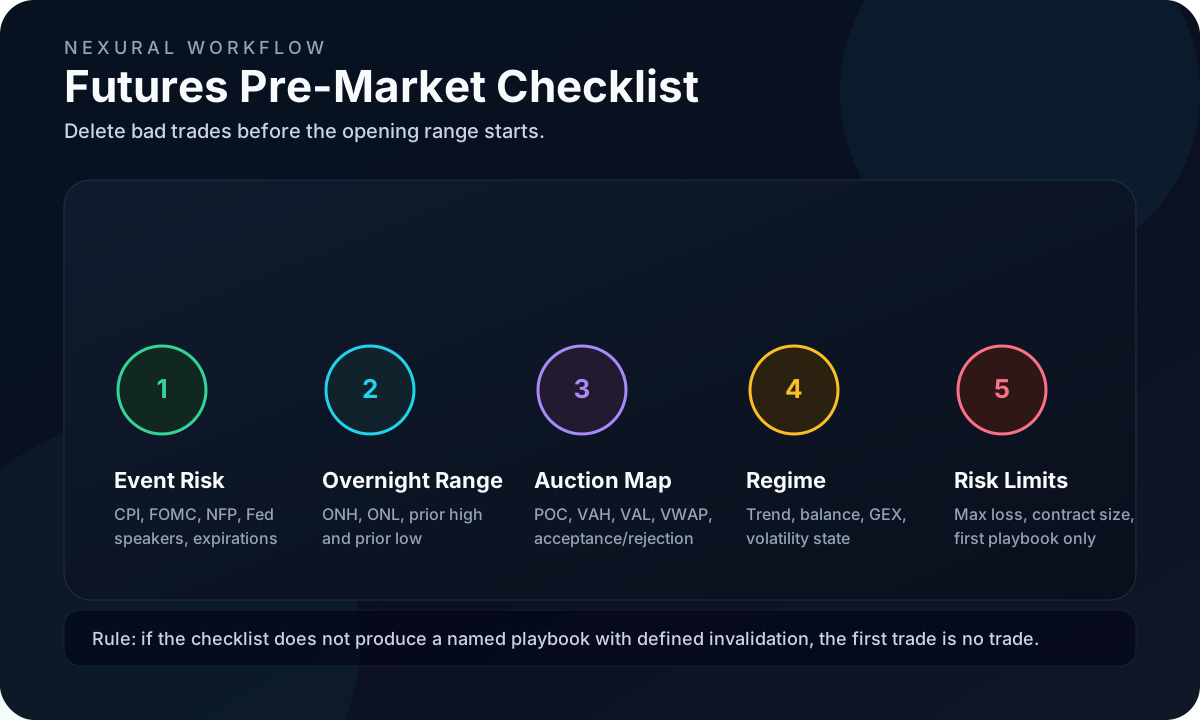
This is the futures pre-market checklist I want beside every beginner before ES, NQ, MES, MNQ, CL, or GC starts moving. It is designed to take 10 to 20 minutes. Any longer and you are probably collecting opinions instead of preparing decisions.

Futures trader pre-market checklist showing event risk, overnight range, auction map, regime, and risk limits

The Checklist in One Page

Futures Pre-Market Checklist

  1. Event risk: CPI, FOMC, NFP, Fed speakers, auction, inventory, expiration, holiday hours.
  2. Overnight range: overnight high, overnight low, prior high, prior low, gap direction.
  3. Auction map: POC, VAH, VAL, VWAP, high-volume nodes, low-volume gaps.
  4. Regime: trend, balance, positive/negative GEX, volatility state.
  5. Playbook list: 1 to 3 valid plays only. Everything else is ignored.
  6. Risk plan: max daily loss, risk per trade, contract size, stop rules.
  7. Journal note: write the first thesis before the first order ticket opens.

The order matters. Event risk comes before technical levels because event risk can make clean levels useless. Risk comes before the first trade because the opening range is where beginners confuse movement with opportunity.

Step 1: Mark Event Risk First

Before drawing a single line, check the calendar. CPI, PPI, NFP, FOMC decisions, Powell press conferences, Treasury auctions, major earnings from index-heavy names, and contract expiration can all change the way futures move.

The question is not "will the event be bullish or bearish?" That is a prediction trap. The better questions:

  • Is there a scheduled release during my trading window?
  • Should I reduce size before the event?
  • Should I wait until after the first reaction?
  • Can my normal stop survive the expected volatility?

If the answer to the last question is no, your size is wrong or the trade is wrong. Use the futures position size calculator before the open, not after the candle expands.

Step 2: Mark the Overnight Range

For index futures, the overnight session gives you the first map of inventory and emotional pressure. Mark:

  • Overnight high
  • Overnight low
  • Prior session high and low
  • Prior close
  • Opening gap direction

Then ask where the market is opening relative to that range. Opening inside overnight balance is different from opening above it. Opening above prior value but under a major weekly POC is different from opening in open air.

This is where beginners make the first mistake. They see the open as a fresh start. It is not. The open is the next chapter of an auction already in progress.

Step 3: Build the Auction Map

Now mark the levels that define value:

  • Prior POC
  • Value Area High
  • Value Area Low
  • VWAP
  • Major high-volume nodes
  • Low-volume gaps or rejection zones

If POC, VWAP, and prior value are still fuzzy, pause here and read Volume Profile: The Institutional Levels That Actually Matter and POC vs VWAP. The pre-market checklist is only as good as the map.

The goal is to know where you care before price gets there. If a candle reaches VAL and you are deciding in real time whether VAL matters, you are already late.

Step 4: Classify the Regime

Regime decides which playbooks are allowed. A mean-reversion setup on a trend day is how a clean checklist becomes a slow bleed.

Regime What It Favors What To Avoid
Balanced / positive GEXPOC rotation, VAH/VAL fadeslate breakouts
Trend / negative GEXbreakout, pullback continuationblind mean reversion
Event / high volatilitysmaller size, wider context, patiencenormal stops before data

This ties directly into How GEX Controls Whether Your Day Trends or Chops. Regime is not a prediction. It is a playbook filter.

Step 5: Write the Playbook List

You do not need ten plans. You need one to three valid plays.

Example:

  • Playbook A: POC bounce if price opens inside value, sweeps below POC, then reclaims with QPulse and Flow Pro.
  • Playbook B: VAH rejection if price tests above value and fails acceptance with sell-side flow.
  • Playbook C: VWAP pullback long only if price holds above VWAP after opening drive and flow confirms buyers.

Anything outside the list is a no. That is the power of prep. It narrows the session before the session tries to widen your impulses.

Step 6: Set Risk Before the First Trade

Write these numbers before the open:

  • Maximum daily loss
  • Risk per trade
  • Maximum number of attempts
  • Contract size for normal volatility
  • Contract size for event volatility
  • Cooldown rule after a loss

If you do not decide these numbers before the first trade, the first loss will decide them for you. It will not be generous.

Step 7: Write the First Journal Note

Before the first order ticket opens, write one sentence in the journal:

Today I will trade only [playbook] at [level] if [confirmation] appears; invalidation is [price/condition]; max loss is [amount].

That sentence is not administrative. It is a behavioral guardrail. It makes the first impulse easier to catch because the plan is already written down.

The Red Flags

If any of these are true, the opening trade should probably be no trade:

  • You do not know the next scheduled economic release.
  • You have not marked overnight high and low.
  • You cannot name the first playbook.
  • You are changing contract size because you feel confident.
  • You are planning to trade the first candle without a level.
  • You already feel behind before the open.

The open does not reward panic. It rewards preparation that can stay simple under pressure.

Source and risk notes

  • CME Group publishes an Economic Release Calendar for planning around U.S. and global economic releases that may affect time-sensitive trading: CME Economic Release Calendar.
  • The Federal Reserve publishes FOMC meeting calendars and states that the FOMC normally holds eight scheduled meetings per year: Federal Reserve FOMC calendars.
  • CME Group also maintains expiration calendars for futures and options contracts: CME Expiration Calendar.
  • The CFTC glossary is a reference for futures-market terms and concepts used in this checklist: CFTC Futures Glossary.
  • This checklist is educational. It can improve process discipline, but it cannot eliminate market risk, slippage, gaps, or fast-market execution issues.

Final rule: pre-market prep is not about predicting the day. It is about deciding what you will and will not trade before the open starts moving. If the checklist does not produce a named playbook with defined invalidation, the first trade is no trade.

Next Step

Run the checklist before opening the order ticket

The checklist should produce a named playbook, a level, an invalidation point, and a written risk limit.

#futures-premarket-checklist#trading-routine#futures#risk-management#market-prep
Share this articleTwitterLinkedIn

Frequently asked questions

What should futures traders check before the market opens?

Check economic events, overnight high and low, prior session value, POC, VAH, VAL, VWAP, GEX or regime state, likely playbooks, max risk, contract size, and the first journal note.

Why is a pre-market checklist important for futures trading?

A checklist reduces impulsive trades by forcing context, event risk, setup selection, and risk limits before the opening range starts moving.

Should beginners trade futures before economic news?

Beginners should usually reduce size or stand aside before major scheduled releases such as CPI, FOMC, or NFP because liquidity, volatility, and slippage can change quickly.

How long should pre-market prep take?

A focused futures pre-market routine can take 10 to 20 minutes once the workflow is practiced. The goal is not more analysis; it is a clear map and a short list of valid plays.

What is the first trade rule after pre-market prep?

The first trade should come from a named playbook with defined invalidation, risk, and confirmation. If prep does not produce that, the first trade is no trade.

S
Sage

Head of Trading Education

Head of Trading Education at Nexural. A futures and swing trader who built the Nexural cockpit to survive his own trading — institutional-grade research, an event-sourced journal, and tools whose math is public. Writes the way he trades: receipts over marketing.

Run the system, not the screenshots

The Nexural Swing Desk ranks setups against the same composite-z gauntlet — no signals, no auto-execute.