

A trader sees ES push through Value Area High and shorts because price is high. Thirty seconds later the candle extends, stops him out, and then pulls back exactly where he wanted it. The level was right. The trade was early.
Value Area High is not resistance. It is a test of acceptance. That one sentence fixes a lot of bad futures trades.
When price reaches VAH, the auction asks a simple question: can the market do business above the area where prior trade was accepted? If the answer is no, rejection can be clean. If the answer is yes, the short is not contrarian. It is just fighting migration.
Most breakouts fail at Value Area High when price probes above prior value but cannot hold there. The useful signal is not the touch. It is the failed acceptance and return back inside value.
VAH is a decision level. Rejection can produce a fade. Acceptance can produce continuation. Treating both as automatic resistance is the beginner mistake.
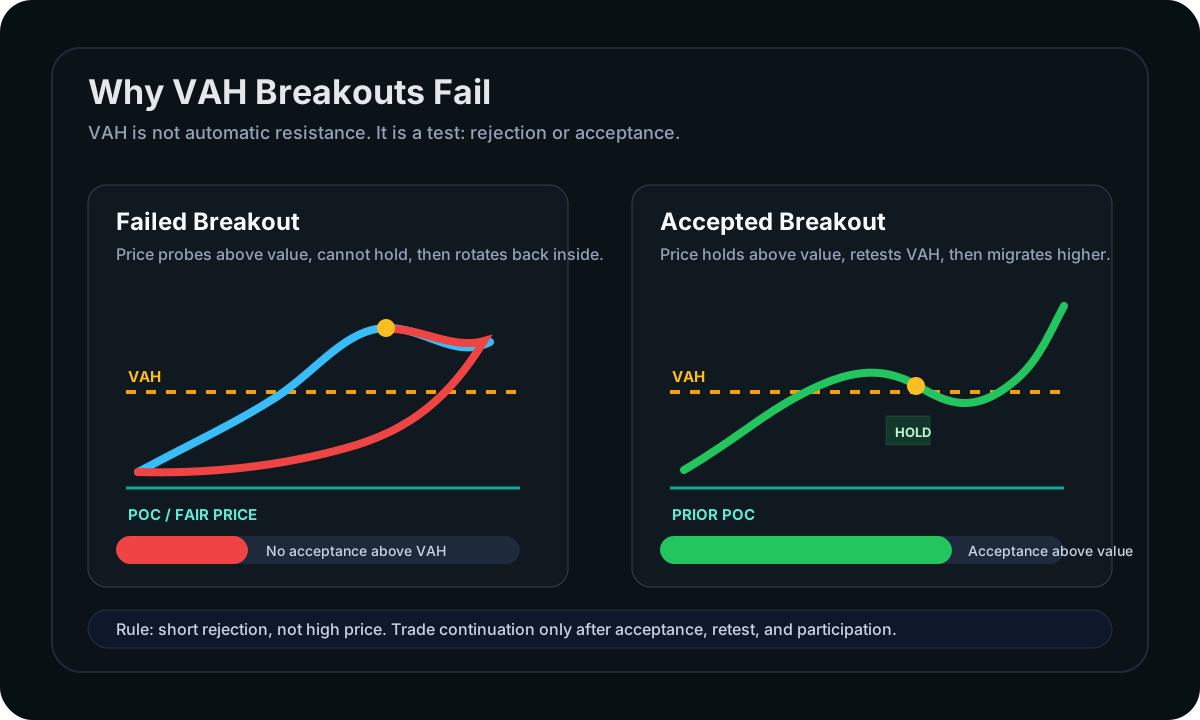
The Mistake: Treating VAH Like a Wall
Beginners learn Value Area High as the upper edge of value, then translate that into high price equals short. That is too simple. VAH is not a concrete ceiling. It is a place where the market either rejects prices above prior value or starts accepting them.
The expensive version is easy to spot: price reaches VAH, the trader shorts the first touch, price pauses, then builds above the level. The trader calls it manipulation instead of admitting the auction accepted higher prices.
What VAH Actually Measures
Volume Profile groups traded volume by price. The value area is the region where a selected share of session volume traded. VAH is the upper boundary. VAL is the lower boundary. POC is the highest-volume price in the profile.
That means VAH is memory, not magic. It shows where prior value ended. The current session still has to prove whether prices above that memory are unfair or newly accepted.
If the map is still fuzzy, read Volume Profile: The Institutional Levels That Actually Matter and POC vs VWAP before turning this into execution.
| Signal | Failed breakout | Accepted breakout | Trade response |
|---|---|---|---|
| Time above VAH | Brief probe. | Holds and rotates above. | Do not short until failure is visible. |
| Retest | Falls back inside value. | VAH starts acting like support. | Fade failure, not the first touch. |
| Order flow | Buy exhaustion or sell response. | Participation follows price higher. | Let flow decide size/confidence. |
| Target logic | POC, VWAP, or opposite value edge. | Next HVN, prior high, or measured continuation. | Pass if R:R is gone. |
The Failed Auction Sequence
A clean failed auction at VAH has four parts. Skip one and the trade gets weaker.
The re-entry is the part impatient traders skip. Shorting the first tick above VAH is not the same as shorting a failed auction.
Where Order Flow Helps
Order flow is useful at VAH because it can show whether breakout buyers are being rewarded or absorbed. You are looking for effort and response.
- Buyers lift offers above VAH but price stops advancing.
- Delta stays positive while price stalls, suggesting effort without result.
- A strong sell response appears after the failed probe.
- Price re-enters value and cannot reclaim VAH.
That is very different from shorting because a line was touched. Use Order Flow for Beginners as the confirmation layer after the level and timing make sense.
Where Regime Changes the Read
The same VAH test behaves differently in different regimes. Balanced sessions often rotate. Trend sessions can migrate. Event sessions can ignore clean profile levels until volatility settles.
Regime does not predict the trade. It filters the playbook. If the day favors trend, a VAH touch is not enough to short. If the day favors rotation, failed acceptance above VAH becomes more interesting.
Short is allowed: price probes VAH, fails to hold above it, re-enters value, flow confirms sellers, and the target to POC gives enough reward.
Short is early: price just touched VAH but has not failed yet.
Short is blocked: price accepts above VAH, retests from above, and buyers keep defending.
Journal the Auction, Not Just the Result
After the trade, write three answers in the journal: did price reject VAH or accept above it, did I wait for confirmation, and did my stop match auction invalidation?
This is how VAH stops being a drawing on the chart and becomes a repeatable decision.
Source and risk notes
- NinjaTrader's Order Flow Volume Profile documentation describes value area display and labels for Value Area High and Value Area Low: Order Flow Volume Profile guide.
- NinjaTrader explains Volume Profile as volume-at-price information plotted horizontally to identify significant price levels: Volume Profile overview.
- CME Group's glossary provides reference definitions for futures-market terms used in trading education: CME Group Glossary.
- This article is educational. VAH, Volume Profile, order flow, and regime context can improve process, but they do not guarantee fills, direction, or profitability.
Final rule: do not short high price. Short failed acceptance. If price pushes above VAH and the auction starts accepting business there, the old value area is not resistance anymore. It is yesterday's map.
Trade rejection only after acceptance fails
VAH is the location. The trade needs failed acceptance, participation, clean invalidation, and enough room back toward value.


