The worst trading days do not usually start with a huge loss. They start with a normal loss, then a slightly annoyed second trade, then a "just get back to flat" trade. By the time the trader realizes the day has changed, the account has already paid for the lesson.
A daily loss limit exists to stop that sequence before the trader starts negotiating.
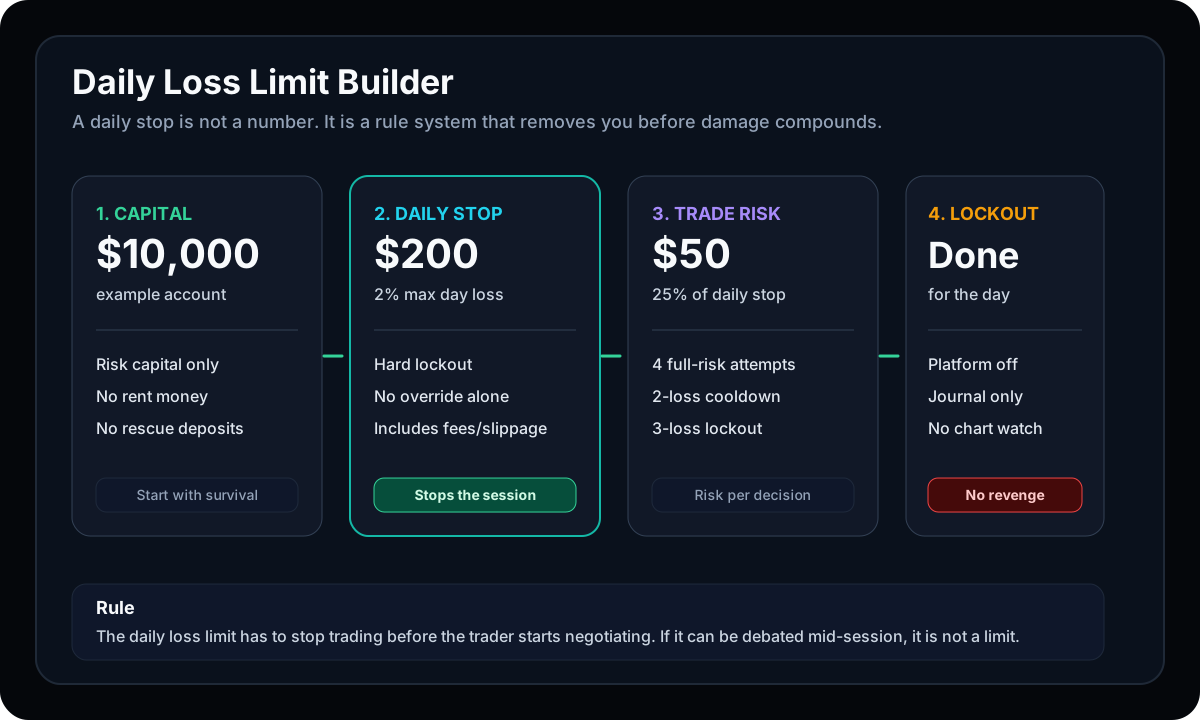
The number matters, but the system matters more. A daily loss limit that can be overridden mid-session is not a limit. It is a suggestion written before the emotional part of you arrived.
The Job of a Daily Loss Limit
A daily loss limit has one job: protect tomorrow from today.
It is not there to predict how much you can afford emotionally. It is not there to punish you after a bad trade. It is there to stop a normal losing day from becoming a behavioral event.
If you only stop after you feel out of control, the rule is late.
The Simple Formula
Build the daily limit in this order:
- Define true risk capital.
- Set maximum daily loss.
- Set per-trade risk as a fraction of that daily loss.
- Define cooldown triggers.
- Define hard lockout triggers.
- Write the review process for the next morning.
Do not start with the number you want to make back. Start with the amount you can lose and still trade the next session cleanly.
A Practical Daily Limit Table
| Account | Daily Stop Example | Per-Trade Risk Example | What It Allows |
|---|---|---|---|
| $5,000 | $75-$100 | $20-$25 | 3-4 controlled attempts |
| $10,000 | $150-$200 | $40-$50 | 3-4 controlled attempts |
| $25,000 | $375-$500 | $100-$125 | 3-4 controlled attempts |
| Prop firm account | Below firm max | Small enough to survive slippage | Buffer before rule breach |
These are examples, not recommendations. The point is the structure: the daily limit controls the session, and per-trade risk fits inside the daily limit. If one trade can consume the whole day, the daily stop is decorative.
Step 1: Define Real Risk Capital
Risk capital means money you can afford to lose without damaging rent, savings, debt payments, business operations, or mental stability.
If losing the daily limit changes how you behave for the rest of the week, it is too high.
This is why futures margin and risk are not the same thing. Margin might let you open the position. It does not tell you whether the loss is acceptable.
If you trade micros, review micro futures position sizing before setting the daily stop. Smaller contracts help only if they are used to reduce risk, not to justify more attempts.
Step 2: Make Per-Trade Risk a Fraction of the Day
A daily limit should allow a small sample of valid trades, not one emotional all-in attempt.
A clean beginner structure:
- Daily loss limit: 100% of allowed day risk.
- Normal trade risk: 20-25% of daily limit.
- Cooldown: after 2 full-risk losses.
- Hard stop: after 3 full-risk losses or the dollar limit, whichever comes first.
If your daily stop is $200, a $50 trade risk gives you four full-risk losses before the hard dollar stop. In practice, you should stop earlier if the losses show the same mistake.
Use the futures position size calculator to turn stop distance into contract count instead of guessing.
Step 3: Add a Cooldown Before the Lockout
The cooldown is the part most traders skip. That is why the hard stop gets hit.
After two full-risk losses, do this:
- Stop for 15 minutes.
- Screenshot both trades.
- Write whether each trade followed the plan.
- Reduce risk by half if trading resumes.
- Trade only one named setup.
If that sounds annoying, good. It should be annoying to continue trading after the session is already damaged.
Step 4: Define the Hard Lockout
The hard lockout should be mechanical enough that you cannot debate it.
Hard Lockout Rules
- Stop trading when closed P&L plus open risk reaches the daily limit.
- Stop trading after three full-risk losses, even if the dollar limit is not hit.
- Stop trading after one rule break.
- Stop trading if you move a stop farther away after entry.
- Stop trading if you enter a trade that was not in the plan.
That last group matters. A good daily loss system does not only stop dollar losses. It stops process failures before the dollar damage catches up.
Step 5: Include Fees, Slippage, and Open Risk
Do not build a daily loss limit from clean spreadsheet math. Futures are not clean.
The daily limit should include:
- Closed P&L.
- Open trade risk.
- Commissions and fees.
- Expected slippage.
- Any correlated exposure.
If you are down $175 on a $200 daily limit and your open trade has $75 of stop risk, you are not $25 away from the limit. You are already over it.
Prop Firm Daily Limits Need a Buffer
If a prop firm gives you a $1,000 daily loss limit, that does not mean your personal limit should be $1,000.
You need a buffer for:
- Slippage.
- Commission differences.
- Platform/account calculation rules.
- Fast market fills.
- Human error.
Use the prop firm risk calculator to keep the personal stop below the firm stop. The goal is not to use every dollar the firm allows. The goal is to avoid rule failure.
The Daily Loss Limit Script
Write the rule where you can see it:
Then put it in the trading journal before the session starts. The rule has to exist before you need it.
When the Limit Hits
When the limit hits, the next job is not analysis. It is separation.
- Flatten positions.
- Close the platform.
- Do not watch the same market on mobile.
- Do not open a simulator to keep "practicing" the same emotional state.
- Review only after the nervous system has cooled down.
The market will still exist tomorrow. The account has to.
Review the Next Morning
The review should answer:
- Did I hit the limit from valid losses or rule breaks?
- Was per-trade risk too large?
- Did I keep trading after the first process warning?
- Did one setup type cause most damage?
- Should tomorrow's size be reduced?
If the day included chasing, revenge trades, or missed-trade frustration, review how to stop overtrading in choppy markets, what to do after three trading losses, and how to journal a missed trade.
No-Trade Conditions
- You are already down more than half the daily limit and feel urgency.
- You have taken two losses from the same setup.
- You moved a stop once today.
- You are trading only to get back to flat.
- You cannot calculate open risk in dollars.
- You are near the prop firm daily limit.
Run the Asymmetric Scorecard pre-flight checklist before any trade near a daily stop. Most late-session damage comes from taking trades that would have failed a calm checklist.
If the setup looks attractive only because you are down on the day, review reward-to-risk examples before entering. Needing the trade to fix the day is not the same as the trade offering clean asymmetry.
Source and risk notes
- NFA investor best-practice materials warn that futures trading is highly volatile and risky and should use only risk capital a trader can afford to lose: NFA Investor Best Practices.
- CFTC warns that leveraged futures accounts can amplify trading risks because participants typically fund futures at only a fraction of the underlying commodity price: CFTC risk advisory.
- CME's position and risk management education describes setting stops within risk tolerances to help prevent losses larger than a trader can handle: CME Position and Risk Management.
- CME's futures margin education explains that futures margin is money deposited and kept on hand with a broker, not a down payment on the underlying asset: Margin: Know What's Needed.
- NinjaTrader's futures best-practice article includes trading only with risk capital, using stop-loss and profit-target orders, and determining position size from capital and risk tolerance: 6 Best Practices for Trading Futures.
- This article is educational. A daily loss limit can reduce behavioral and account damage, but it cannot guarantee fills, prevent slippage, override exchange/broker rules, or remove the risk of losses beyond planned amounts.
Final rule: the daily loss limit has to work when you are least reasonable. Build it before the session, size trades inside it, make the lockout mechanical, and review tomorrow. The trader who survives the bad day gets another chance to trade well.
Turn the daily stop into a hard risk rule
A daily loss limit only works when per-trade risk, cooldowns, and lockouts are defined before the first order ticket opens.