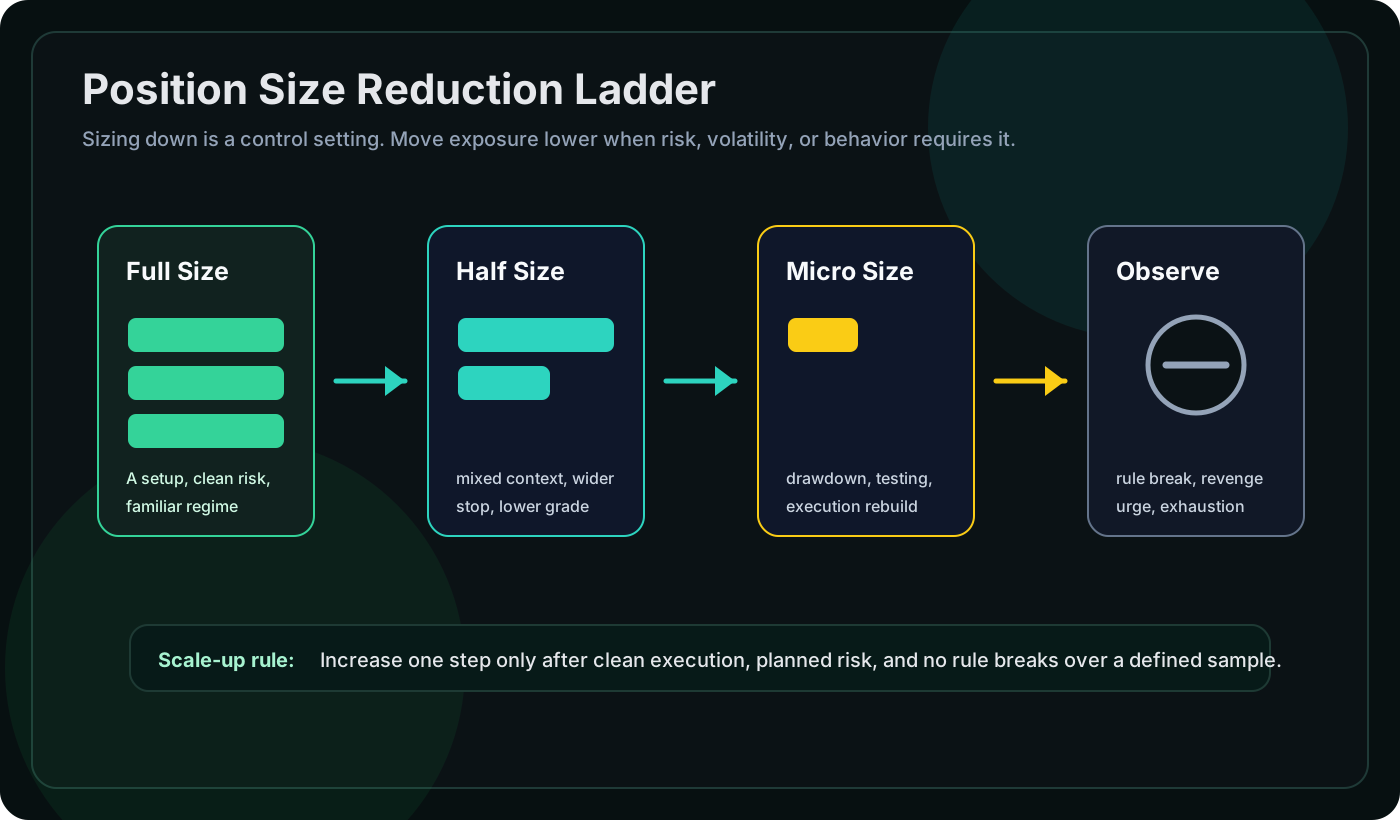
The hardest part of sizing down is not the math. The math is easy. Two contracts become one. Five micros become two. The hard part is the sentence your ego writes underneath it: "I am going backward."
That sentence is expensive.
Reducing size does not mean you failed. It means you are changing the pressure on the system so you can execute the next decision cleanly.
Size Is a Control Setting
Position size is not your identity. It is a control setting.
You adjust it when conditions change:
- volatility expands,
- stop distance widens,
- market regime becomes less familiar,
- execution quality drops,
- losses start affecting the next trade,
- or the setup is valid but lower confidence.
That is not weakness. That is the same logic behind Futures Margin vs Risk: the fact that you can carry more contracts does not mean the trade deserves them.
The Size-Down Ladder
Do not invent your size reduction while emotional. Use a ladder.
| Mode | Use When | Goal |
|---|---|---|
| Full size | A setup, familiar regime, clean risk | execute normal edge |
| Half size | mixed context or wider stop | stay involved with less pressure |
| Micro size | drawdown, testing, shaky execution | rebuild process reps |
| Observation mode | rule break, revenge urge, exhaustion | stop damage |
| Scale-up mode | rules followed for a defined sample | increase exposure one step at a time |
This is different from panic sizing. Panic sizing says, "I feel bad, so I will trade tiny forever." A ladder says, "When condition X appears, I move to size Y until condition Z improves."
When to Reduce Size
You should size down before the account forces you to.
Common triggers:
- Volatility expansion: the same stop now costs more dollars.
- Wider invalidation: the trade is still valid, but the stop must sit farther away.
- Drawdown: your account or prop-firm buffer has less room.
- Execution errors: you are late, chasing, moving stops, or revenge trading.
- Lower setup grade: the trade is acceptable but not an A setup.
- Emotional pressure: one loss is affecting the next decision.
Use the futures position size calculator, the R-multiple calculator, and the tick value cheat sheet before the trade. If you trade funded evaluations, connect this to prop firm drawdown rules.
When Not to Reduce Size
Do not reduce size just because a good trade lost.
If the setup was valid, risk was planned, execution was clean, and the loss stayed inside R, then the lesson may be "accept normal variance." Cutting size after every normal loss teaches fear, not discipline.
Use How to Review a Losing Trade Like a Professional before changing the size. First classify the loss. Then decide whether the next trade needs lower exposure.
The Ego Trap
Many traders treat contract count like a scoreboard.
One contract feels beginner. Two feels serious. Five feels like progress. Then size becomes emotional proof instead of risk math.
That is how a trader ends up taking the same contract count in completely different conditions:
- quiet range day, same size,
- news-driven trend day, same size,
- after three losses, same size,
- wide stop setup, same size,
- prop account near drawdown, same size.
That is not consistency. That is rigidity wearing a discipline costume.
Example: Same Trade, Different Size
Assume you normally risk $75 per trade on MES.
POC Bounce Setup
Clean version: four-point stop, balanced context, flow confirms. Two MES contracts risk about $40 before fees and slippage. Size is fine.
Wide version: nine-point stop after volatility expands. Two MES contracts now risk about $90 before fees and slippage. Same setup, different exposure.
Professional answer: reduce size or skip. The setup did not fail. The original contract count stopped fitting the risk plan.
This is why micro futures position sizing exists. Micros are not shame contracts. They are precision tools.
How to Scale Down Without Spiraling
Use a written rule:
- After two execution errors: half size for the next five trades.
- After a daily loss-limit breach: observation mode until tomorrow.
- After three losing trades in plan: no automatic size cut, review first.
- After three revenge or chase tags: micro size until ten clean executions.
- When stop distance doubles: size down enough to keep dollar risk stable.
Pair this with the daily loss limit guide, the losing-streak reset, and the overtrading guide.
How to Scale Back Up
Do not scale back up because you are bored.
Scale back up after process improves:
- Five to ten trades with no rule breaks.
- Actual loss stays close to planned risk.
- No revenge entries after losses.
- Setup grade and execution grade are logged.
- The next size step still fits the daily loss limit.
Then increase one step, not all the way back. From micro size to half size. From half size to normal size. If behavior breaks again, step back down without drama.
Journal the Size Decision
Most traders journal entry and exit. Fewer journal the size decision. That is a miss.
Add these fields to the Nexural journal:
- planned size,
- actual size,
- reason for size,
- size mode: full, half, micro, observation, scale-up,
- whether size matched the stop distance,
- whether size affected execution quality.
Use the futures trading journal workflow and the futures trading routine to make this part of the day instead of an afterthought.
The Reframe
The amateur sentence is: "I had to reduce size because I am failing."
The professional sentence is: "I reduced size because the risk environment changed."
That reframe matters because shame creates bad trades. It makes you rush the comeback, oversize the next clean setup, and treat one small contract like a personal insult.
Size down to protect decision quality. Scale back up when decision quality earns it.
Source and risk notes
- CME's trade and risk management education says risk management begins with each new trade and highlights position size, risk identification, and avoiding overtrading: CME Trade and Risk Management.
- CME's position and risk management education emphasizes managing both profitable and losing positions and using stops and P&L targets: CME Position and Risk Management.
- Schwab's loss aversion overview describes the tendency to feel losses more acutely than equivalent gains, which can distort financial decisions: Loss Aversion Bias.
- Schwab's trader behavior article discusses loss aversion and predefined trading rules as ways to reduce bad trade behaviors: Breaking Bad Trade Behaviors.
- NFA investor best-practice materials warn that futures trading carries substantial risk and should use only risk capital a trader can afford to lose: NFA Investor Best Practices.
- This article is educational. Smaller size can reduce exposure, but it cannot remove futures leverage, slippage, liquidity, platform, event, or execution risk.
Final rule: reduce size before your behavior breaks, not after. The contract count is not the achievement. Clean execution is.
Make size a rule, not a mood
Sizing down works best when the trigger, size step, and scale-back-up condition are written before emotion enters the trade.