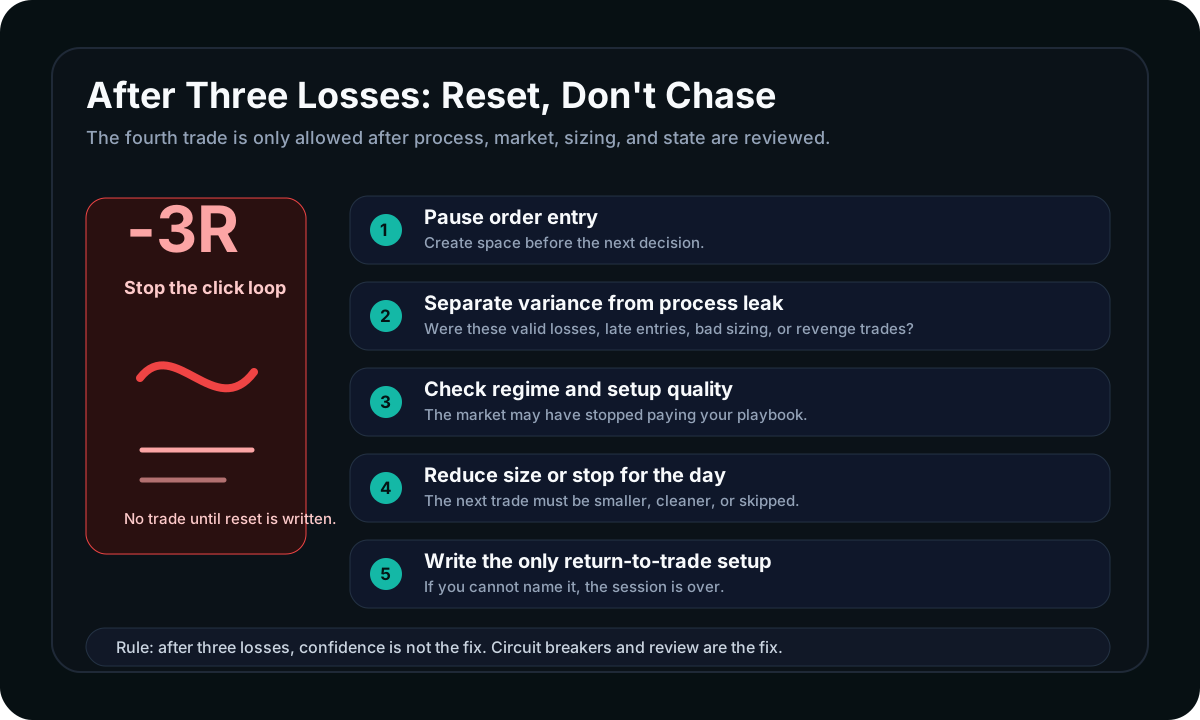
The fourth trade is the dangerous one. The first loss is annoying. The second loss is uncomfortable. The third loss starts talking. It says the next setup has to work, the day cannot end red, and size can fix what process broke.
That voice is not a trading signal. It is the reason you need a three-loss protocol before the session begins.
After three trading losses in a row, the answer is not confidence. The answer is circuit breakers and review. You need to know whether the losses were normal variance, a market-regime mismatch, or a process leak. Those require different responses.
The Three-Loss Rule
The rule is simple:
This does not mean the trader is bad. It means the session has changed. Either the market is not paying the setup, the trader is executing poorly, or the normal distribution of outcomes is doing what distributions do.
The review decides which one it is.
Step 1: Pause Order Entry
Do not review the losing streak while the next candle is forming and the order ticket is open. That is not review. That is negotiation.
- Close the order ticket.
- Step away for at least 10 to 15 minutes.
- Do not lower timeframes to find a faster recovery trade.
- Do not increase size to get back to flat.
If you cannot pause, the session should probably be over. The inability to stop clicking is information.
Step 2: Separate Variance From Process Leak
Three valid losses can happen. A good system can lose several trades in a row. The question is whether the trades were valid.
| Question | Valid Loss | Process Leak |
|---|---|---|
| Setup | Named playbook | Impulse or vague idea |
| Timing | Entry matched trigger | Late candle chase |
| Stop | Stop honored | Stop moved or ignored |
| Size | Risk was pre-planned | Size increased after loss |
If all three were valid losses, you may be dealing with variance or regime mismatch. If one or more were process leaks, the next trade is blocked until the rule break is named.
Step 3: Check the Market Regime
Sometimes the trader did not break. The market changed.
Ask:
- Am I fading a trend day?
- Am I trying to trade breakouts in chop?
- Has VWAP or POC become a grinder instead of a clean level?
- Did economic news change volatility?
- Is my setup designed for this regime?
Use GEX regime context, the pre-market checklist, and the choppy-market overtrading guide to decide whether the market is still compatible with your playbook.
Step 4: Review Stop-Taking, Timing, and Sizing
After three losses, review the expensive basics:
- Stop-taking: did you exit where the trade was invalid, or where discomfort peaked?
- Timing: did you enter before the trigger, after the move, or at the planned spot?
- Sizing: did the position size make the stop emotionally tradable?
- Reward-to-risk: did the trade have enough room to justify the loss?
If stop-taking was the issue, revisit The Psychology of Taking the Stop. If sizing was the issue, read Position Sizing: Why the 2% Rule Is Wrong and run the futures position size calculator.
Step 5: Decide the Circuit Breaker
The next move has only three acceptable options:
Three-Loss Circuit Breaker
- Stop for the day: if daily loss limit is hit, emotional state is poor, or process leaks appeared.
- Reduce size: if losses were valid but confidence or volatility has changed.
- Trade one final A setup: only if regime still fits, size is reduced or controlled, and the setup is written before entry.
Notice what is missing: "take one more to get even." That is not a plan. That is a withdrawal request from the part of the account you cannot afford to lose.
The Return-to-Trade Checklist
If trading continues, write this in the journal before the next trade:
- The three losses were mostly valid losses or mostly process leaks.
- The current regime still supports my setup.
- The next trade is named: [setup].
- The entry trigger is: [condition].
- The invalidation is: [price or condition].
- The size is: [contracts], and it is acceptable if this trade also loses.
- If this trade loses, the session is over.
That last line matters. The fourth trade cannot become the doorway to trades five, six, and seven.
How to Journal the Losing Streak
Do not write, "bad day." That teaches nothing.
Use this format:
Loss 2: setup, entry timing, stop behavior, size, regime, result.
Loss 3: setup, entry timing, stop behavior, size, regime, result.
Verdict: variance, regime mismatch, or process leak.
Next rule: stop, reduce size, or one written A setup only.
The goal is not to feel better. The goal is to stop the same mistake from wearing a new candle costume.
Source and risk notes
- Investor.gov emphasizes understanding risk tolerance, investment objectives, experience, financial situation, and aversion to losses before day trading: Thinking of Day Trading? Know the Risks.
- FINRA's day-trading risk disclosure says day trading can be extremely risky and may be inappropriate for traders with limited resources, limited experience, or low risk tolerance: FINRA Day-Trading Risk Disclosure.
- CME Group's trade and risk management education says risk management begins with each new trade and highlights controlling risk and avoiding overtrading: CME Trade and Risk Management.
- Odean's research on the disposition effect documents investor reluctance to realize losses and tendency to realize gains more readily than losses: Are Investors Reluctant to Realize Their Losses?.
- This article is educational. Circuit breakers and journal reviews can improve process, but they cannot remove market risk, leverage risk, slippage, or the possibility of continued losses.
Final rule: after three losses, the next trade has to earn its way back onto the screen. If you cannot explain why the fourth trade is different in writing, it is not different. It is just the losing streak asking for more room.
Pause, journal, then reduce risk
After three losses, the next trade must be written, smaller, and tied to one A-grade setup. Otherwise the session is over.