A beginner sees that the broker only requires a few hundred dollars of day margin for a micro futures contract and thinks, "That's my risk." Then NQ snaps 80 points, the stop slips, and the loss has nothing to do with the number that made the order ticket available.
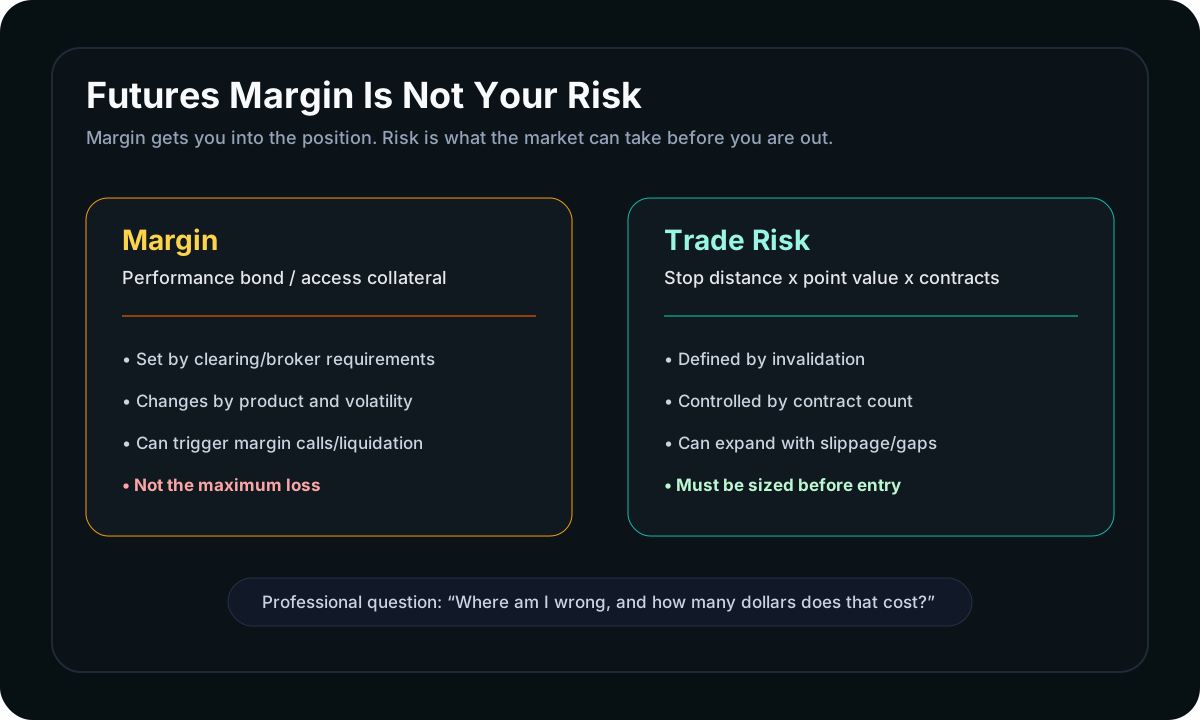
Margin is not risk. Margin is access. Risk is where you are wrong, how far away that is, how many contracts you hold, and how the market behaves when you try to exit.
This distinction matters because futures are leveraged. The margin requirement may be small relative to the contract exposure. That can make the trade feel affordable while the actual dollar risk is too large for the account.
The Difference in One Sentence
Those are different questions. A broker can allow the position while the trade is still oversized. A trader can meet margin requirements and still be taking unacceptable risk.
What Futures Margin Actually Is
In futures, margin is commonly described as a performance bond. It is collateral required to open or maintain a position. CME describes performance bonds, also known as margins, as deposits held to help clearing members meet obligations to customers and CME Clearing.
Margin can vary by:
- Product
- Volatility
- Clearing requirements
- Broker policies
- Whether the position is intraday or held overnight
The key point: margin is not a stop. It is not a guarantee. It is not your maximum loss.
What Trade Risk Actually Is
Trade risk starts with invalidation. Where is the trade wrong?
The basic formula:
For example, if one MES contract is $5 per point and your stop is 12 points away, the planned risk is $60 before slippage and fees. If you trade three contracts, the planned risk is $180. The margin number does not change that math.
This is why the futures position size calculator should come before the order ticket.
Margin vs Risk Example
| Question | Margin Answer | Risk Answer |
|---|---|---|
| Can I open it? | Broker says yes | Not enough information |
| Where am I wrong? | Margin does not answer | At invalidation |
| What can I lose? | Not capped by margin | Stop math plus slippage risk |
| What controls size? | Minimum access requirement | Account risk limit |
The Maintenance Margin Problem
Maintenance margin is the minimum equity needed to keep a position open. If account equity drops below required levels, the trader may need to add funds or the broker may reduce or liquidate exposure.
That creates a second layer of risk. A trade can be wrong enough to lose money and also create margin pressure. In a fast market, the exit may not happen exactly where the trader planned.
This is one reason beginners should not size from margin. A position that barely meets margin leaves little room for adverse movement, changing volatility, commissions, slippage, or additional margin requirements.
Why Low Margin Can Make Bad Risk Feel Safe
Low margin lowers the barrier to entry. It does not lower the contract's ability to move against you.
- A small margin requirement can make too many contracts feel affordable.
- A wide stop can turn a micro contract into a real account hit.
- A margin call can force action at the worst time.
- Volatility can raise requirements and widen practical stops.
This connects directly to Micro Futures Position Sizing, MNQ vs MES, reward-to-risk examples, and why flat-percent sizing can fail.
The Correct Workflow
- Pick the setup.
- Define invalidation.
- Measure stop distance.
- Convert stop distance into dollars per contract.
- Choose contract count from account risk.
- Check margin after the risk decision.
- If margin or risk is uncomfortable, reduce size or pass.
Margin is a constraint. Risk is the decision. Do not reverse that order.
Journal Prompt
Before entering the next futures trade, write this in the journal:
If you cannot fill that out cleanly, the trade is not ready.
Source and risk notes
- CME Group describes performance bonds, also known as margins, as deposits held to help clearing members meet obligations to customers and CME Clearing: CME Performance Bonds/Margins.
- CME's futures margin education says futures margin is money deposited and kept on hand with a broker when opening a futures position, and that it is not a down payment on the underlying asset: Margin: Know What's Needed.
- CME explains that margin requirements can be adjusted based on market volatility: Understanding Margin Changes.
- NFA says futures trading is highly volatile and risky and should use only risk capital a trader can afford to lose: NFA Investor Best Practices.
- This article is educational. Margin requirements, broker policies, slippage, liquidation rules, and volatility can change; losses can exceed planned stop risk or deposited margin in adverse conditions.
Final rule: never ask, "How many contracts can my margin afford?" Ask, "How many contracts can my stop afford?" That one change prevents a large amount of beginner futures damage.
Size from stop risk, not margin access
Margin only says whether the position can open. The position size should come from invalidation, point value, and max account risk.