Handbook / STS — the Sage Trading System
The STS rules
Sage's ten STS rules, and when to stop trading for the day.
In one sentence
The rules keep your losses small and stop one bad day from turning into a bad month.
Why it matters
Most accounts are not lost on one trade. They are lost on a bad day, when someone tries to "win it back".
Clear rules decide for you before emotions kick in.
Do this
These are the ten STS rules from Sage's notes, in plain words:
- Every trade has a stop. No exceptions.
- The target must be at least three times as far as the stop.
- Enter on the 1st or 2nd candle after the QPulse cross. The 3rd is the last chance. Never the 4th.
- No trade when Flow Pro is dead.
- The 15-minute and 3-minute charts must agree.
- Never add to a winning trade. Trade 1 to 5 micro contracts and keep your size steady.
- Move your stop to your entry price after the first target.
- Stop after a few small losses in one day. After 3, take a 30-minute break. After 4, think about stopping. After 5, stop.
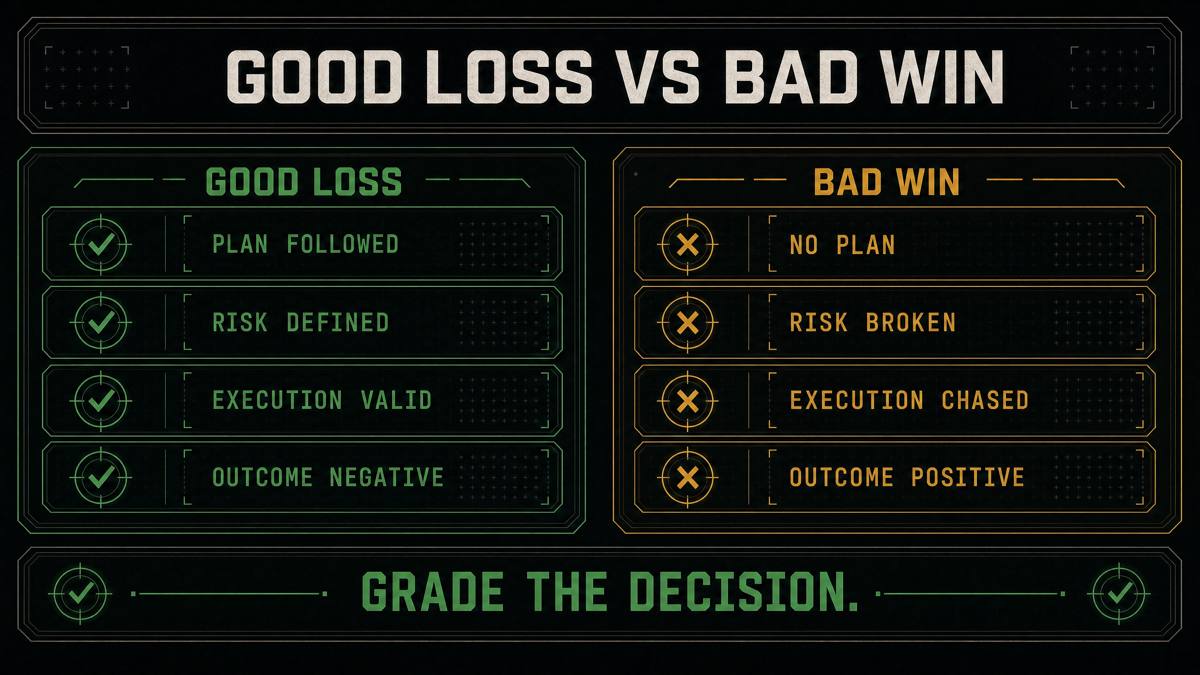
- Judge a trade by whether you followed the plan, not by whether it made money.
- The market will be there tomorrow.
Rule 6 is for STS day trades only. Swing and long-term trades can add in stages, but only under their own written rules.
Real example
This teaching diagram shows the difference between a good loss and a bad win. It is not a real trade.
Common mistakes
- Revenge trading. Jumping into a new trade right after a loss, to make it back fast. Pause first.
- Trading bigger after a loss. Keep your size the same. Never size up to "make it back".
- Calling a lucky win a good trade. If you broke the plan, it was a warning, even if you made money.